How to light a nail desk: half moon, gooseneck or floor lamp
Three shapes of light suit three kinds of desk. The right one depends on how wide your table is, where the hands rest and how you match a shade before the color goes on.
Start with the reason you lean in
When a nail is hard to see, the body solves it the cheap way. Your head drops, your shoulders round, and the sidewall finally comes into focus. OSHA lists that posture among the strains of nail work, next to repetitive filing and forearms resting on hard table edges. Its first fix is plain: adjust the lighting so you can see without bending over the work table. NIOSH describes the same strain from leaning over tables and points to adjustable chairs and breaks as the answer for it.
A lamp will not fix a chair set too low, and it will not replace a break between clients. What it does is take away one reason to lean. When the hand is lit from above and from both sides, the shadow of your own fingers stops landing on the nail, and your head can stay where the chair puts it. OSHA also suggests raising the client's hand and padding the table edge, so treat the light as one part of a desk you set up as a whole: chair height first, hand pillow second, light third.
There are three shapes to choose from. An arch stands over the hands and lights them from both sides. A gooseneck bar comes in from one side and bends to where you point it. The floor lamp carries that same bar on a stand, so it needs no room on the desk at all.
Half moon light: an arch over both pairs of hands
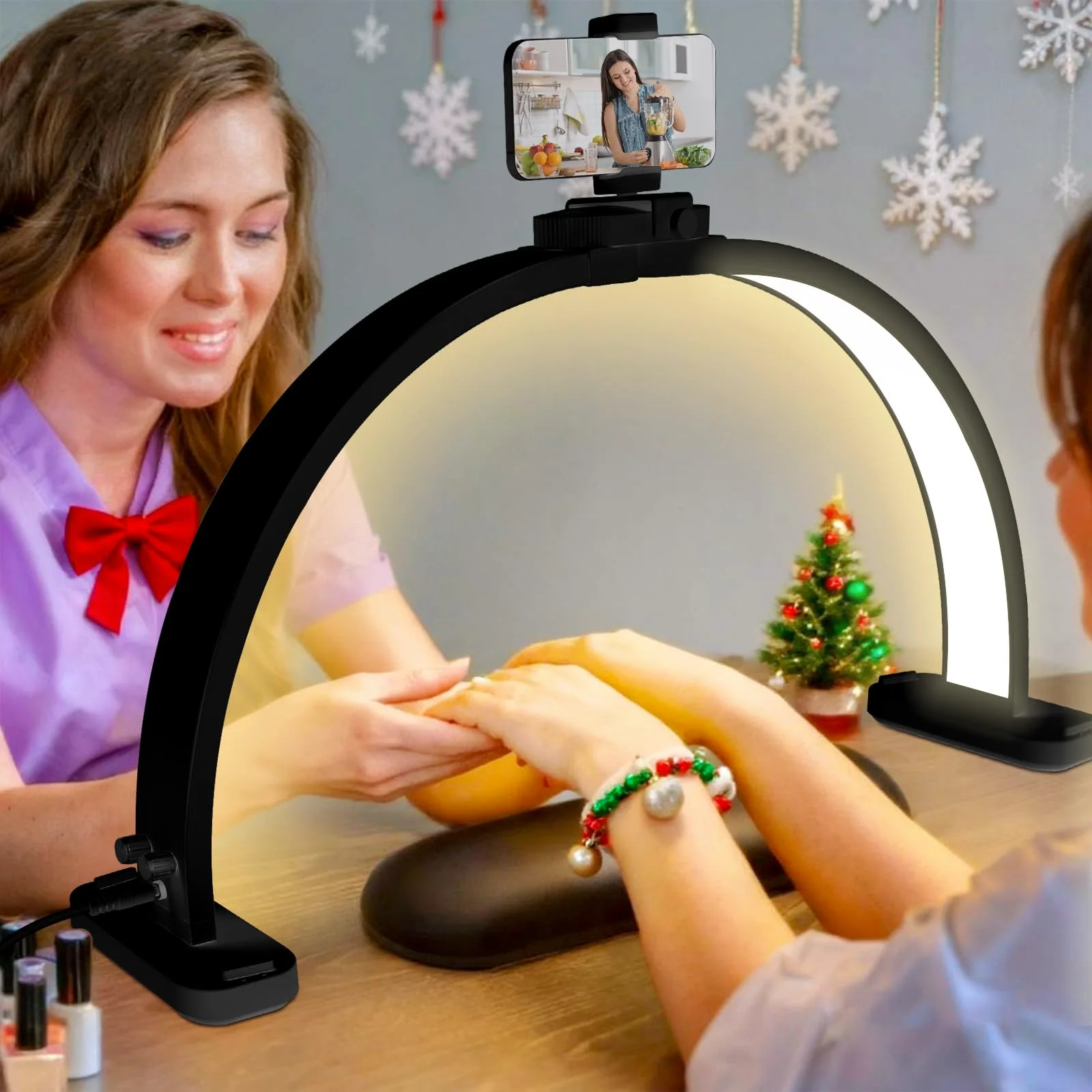
A half moon light stands across the desk like a small bridge. Our 30.7-inch half moon light is 30.7 inches wide with about 14 inches of clear height under the curve, enough for a hand pillow and a gel lamp to sit underneath. Its 392 LEDs (CRI 85 or higher) run along the inside of the arch, so light falls on the hand from the left, the right and above at once. Setup takes no tools. Unfold the frame and slot both ends into the base.
Measure your table before anything else. The arch needs a little more than 31 inches of width, and the base is 6 inches deep, so on a narrow manicure table it takes a strip along one edge. Most techs put the curve so it crosses the table between the two chairs, with the open sides facing each of you. Nothing then hangs between your eyes and the client's fingers, which is the whole point of the shape.
For a bigger station, the 33.5-inch foldable half moon is 16.3 inches tall overall and carries 465 LEDs. It is worth the extra width if two hand pillows share the space or if a larger curing lamp lives under the arch. On a small home desk, the 30.7-inch arch is the easier fit.
Gooseneck lamp: one bar you aim
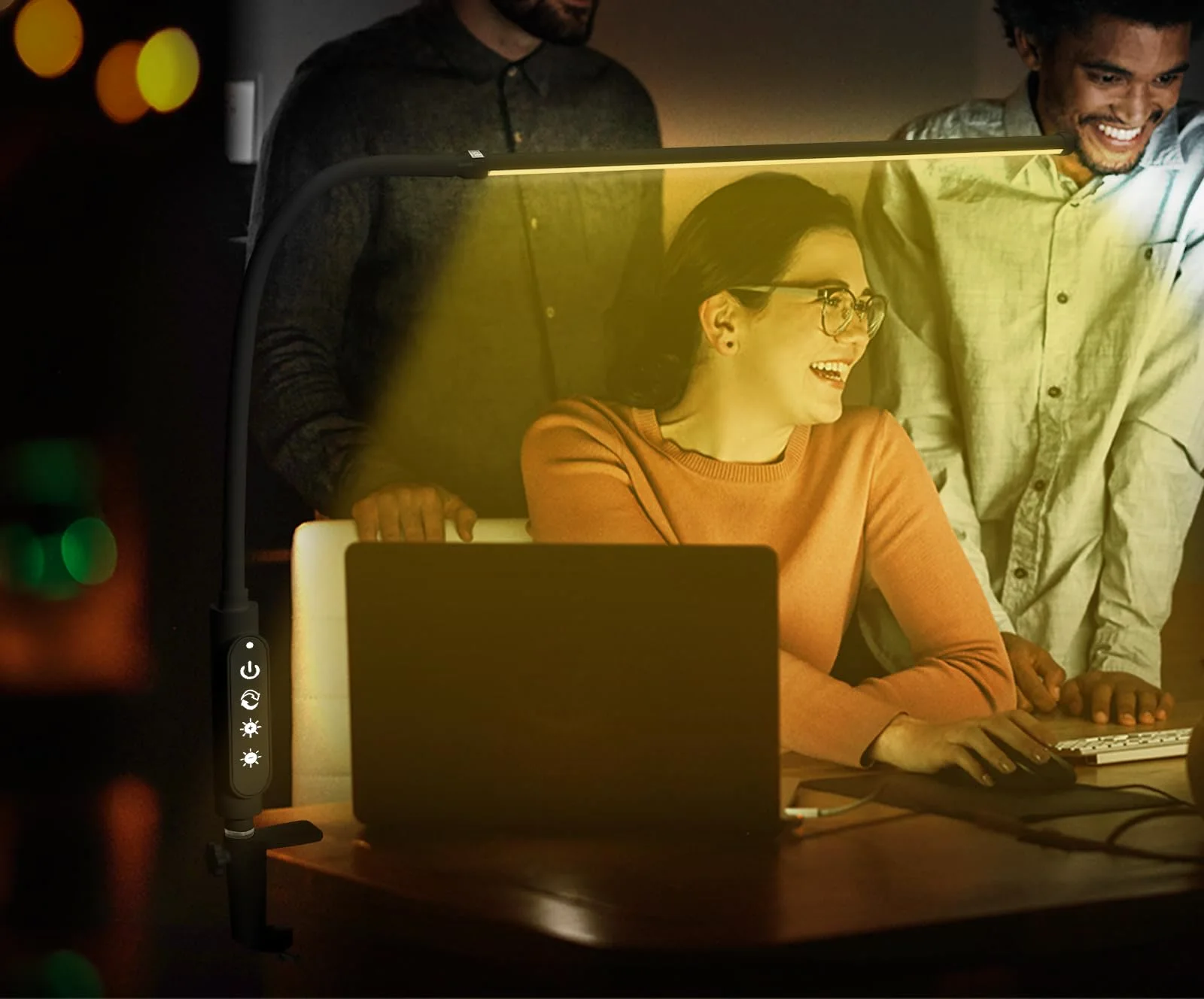
Where an arch floods the hand, a gooseneck aims. The gooseneck nail desk lamp puts a 23.6-inch light bar on an arm that bends through 360 degrees, so the bar can sit low over the fingers or high over the whole table. It comes with either a table base or a clamp. That clamp grips desks up to 2.1 inches thick and leaves the top of the desk clear, which matters on a corner station where every inch is already spoken for.
Light from one side throws a shadow on the other, so place the lamp opposite the hand that holds the brush. A right-handed tech sets it on the left and angles the bar down across the client's fingers. Lift the bar a few inches when you file, since the hand moves more, and lower it again for detail work along the cuticle line.
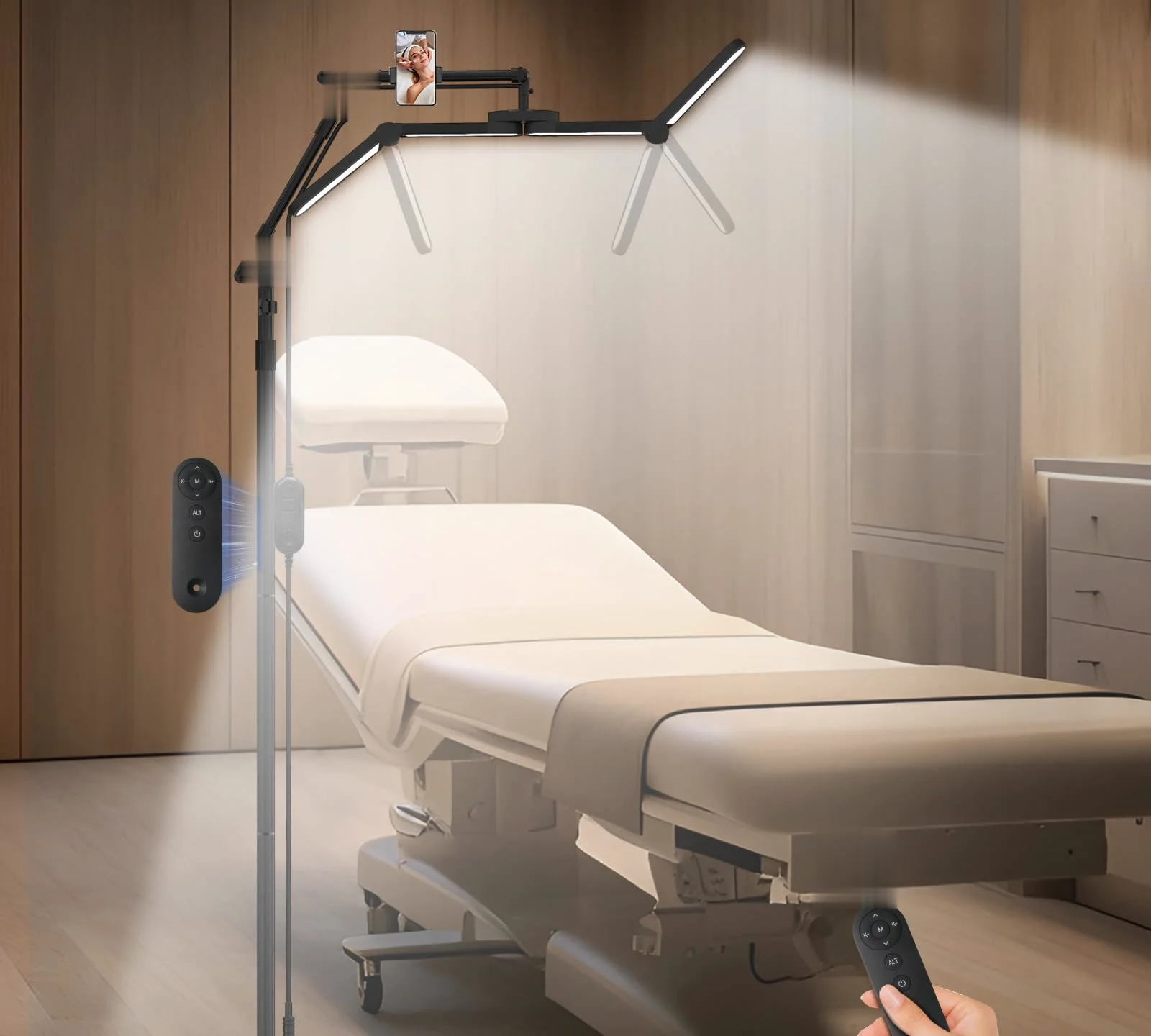
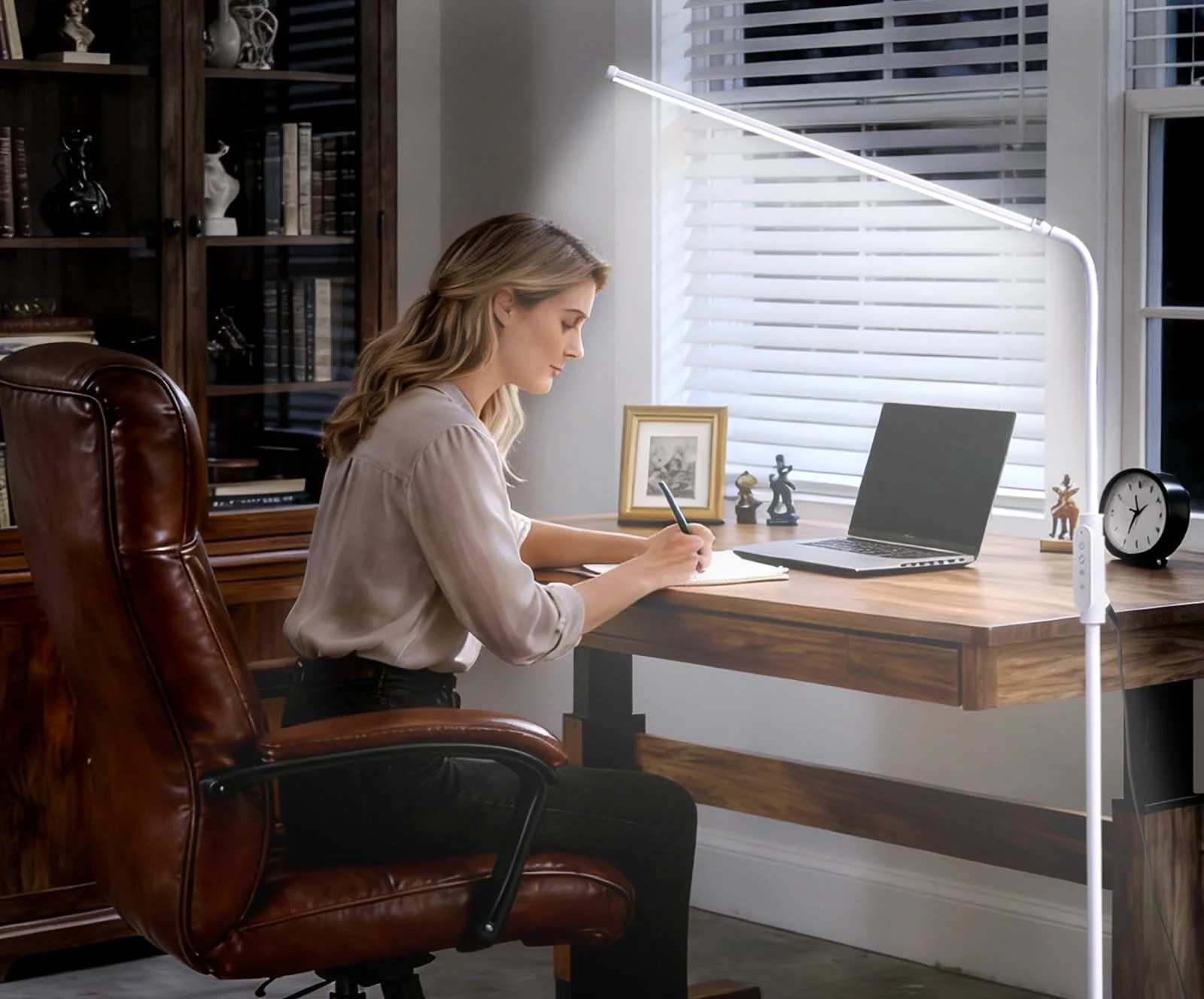
The gooseneck floor lamp carries the same 23.6-inch bar on a 57-inch stand with a round base 9.8 inches across. It suits a desk with no room left for a base, or a station where you move between the manicure table and a pedicure chair. A touch panel switches it on and steps through the settings.
Color temperature: warm, neutral and daylight
Color temperature is measured in kelvin. Around 3000K the light is warm and slightly yellow, like a lamp in a living room. At 4500K it reads neutral. Turn it up to 6500K and it goes cool and close to an overcast sky. The half moon arch covers 3000K to 6500K in three settings, and both gooseneck lamps switch between 3000K, 4500K and 6500K.
Matching a shade is where this pays off. Many techs mix and match color under the coolest setting, because it sits closest to daylight and shows a nude or a red the way it will look by a window. Then switch to warm for a second look. Plenty of kitchens and bathrooms are lit warm, and a shade that holds up under both lights is one the client will not call about two days later.
CRI, the color rendering index, tells you how faithfully a light shows colors compared with daylight. A rating of 85 or higher, as on the half moon arch, keeps pinks from drifting toward gray and keeps two close nudes apart on the swatch stick.
| Lamp | Shape and size | Color temperature | Brightness | Where it stands |
|---|---|---|---|---|
| Half moon light 30.7 in | Arch 30.7 in wide, about 14 in clear inside, 392 LEDs, CRI 85+ | 3000K to 6500K, 3 settings | 10 levels | Base on the desk, 6 in deep |
| Foldable half moon 33.5 in | Arch 33.5 in wide, 16.3 in tall overall, 465 LEDs | 3000K to 6000K, 3 settings | Not listed | Base on the desk, 6 in deep |
| Gooseneck desk lamp | 23.6 in light bar, arm bends 360° | 3000K, 4500K, 6500K | 5 levels | Table base or clamp, desks up to 2.1 in thick |
| Gooseneck floor lamp | 23.6 in light bar, 57 in tall | 3000K, 4500K, 6500K | 5 levels | Round floor base, 9.8 in across |
Brightness steps through the day
Daylight from a window changes the room more than people expect. At ten in the morning it adds a lot, and by six in the evening it adds nothing. Ten brightness levels on the half moon arch and five on the gooseneck lamps let you follow that swing instead of working in one setting from open to close.
More light is not always better. A high-gloss top coat throws a bright reflection back at you, and at full power that glare can hide the very edge you are trying to clean. Drop a step or two for top coat and clean-up, then bring the light back up for shaping, when you need to see the free edge against the skin.
Filming your sets: the phone holder
Video sells nail work, and good video starts with even light. The 30.7-inch arch has a phone holder that takes the phone flat, to record the whole set from above, or upright, so a client can watch something while you work. A small stand in the base holds a phone for video calls. The 33.5-inch model has a holder that works flat or upright as well.
Record under the cool setting so the colors on screen match what the client saw at the desk. An arch lights the hand from both sides, so the shadows that make a nail look dented on camera mostly disappear. If you work with a gooseneck, keep the bar on the side away from the phone, or the lamp will sit in the shot.
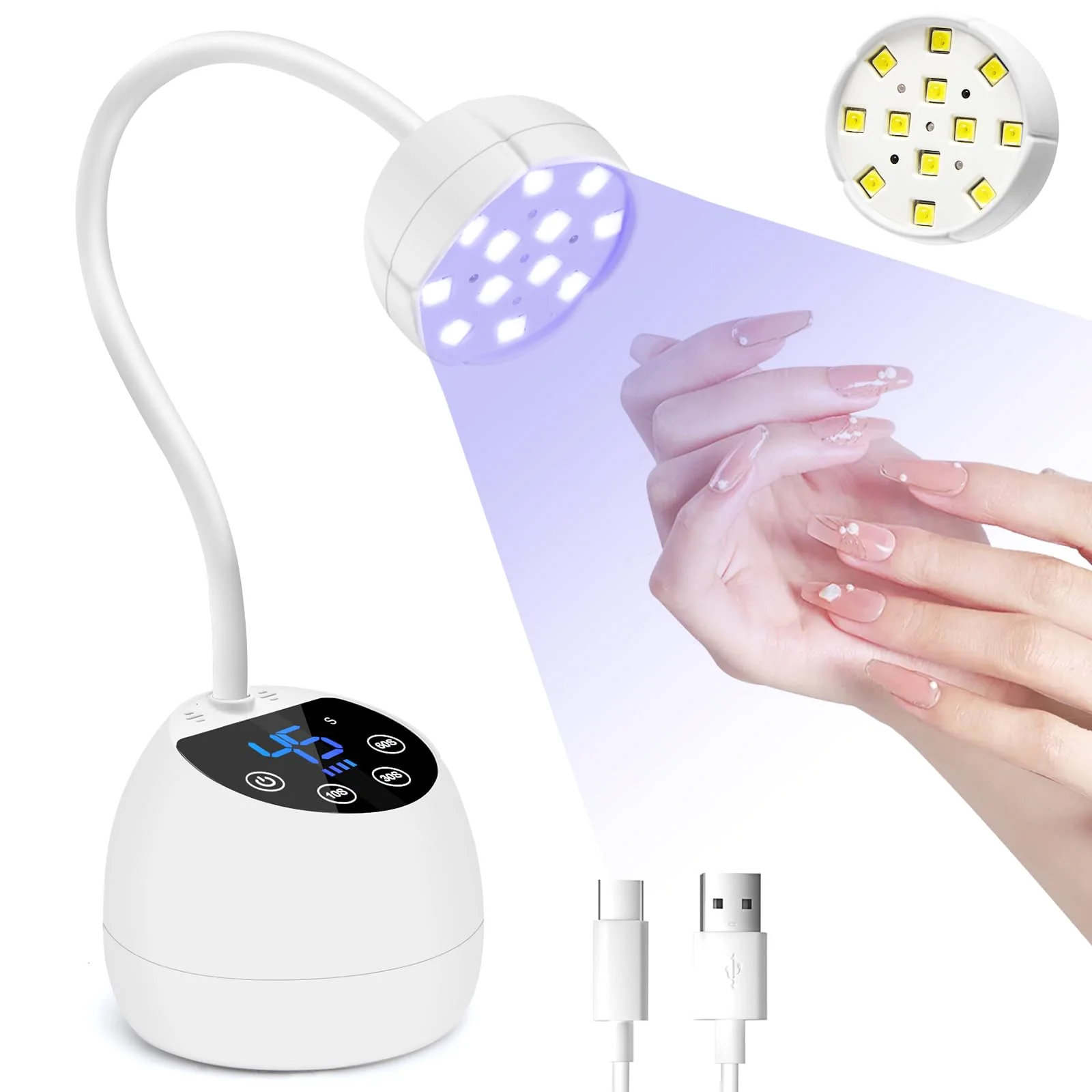
Every lamp mentioned here lives on the lamps shelf, next to the small cordless curing lamp. That one is a different tool with a different job: the arch is a lighting lamp, not a UV curing lamp, and our story on gel lamps and the skin on your hands explains where the two part ways.
Each of these desk lights belongs to the Pro nail and lash line of the people at CGBE.